A crane day runs in the same order, whatever the tree.
A crane tree removal day goes in a set order: a look at the tree and the site, a briefing, the crane set up level, one pick after another until the tree is down, and then the yard. None of it comes with a clock: the tree sets the pace. Whether crane-assisted tree removal is the right method is argued on crane or climber.
Before anything is cut, someone looks at the tree and the site
The first step on a tree job is a look, not a cut. OSHA's tree-care inspection guidance says that before any tree care operation, employers "need to check the health of the tree and assess the work site for fall and struck-by hazards." The CDC, reviewing tree care deaths, says worksite surveys "should be conducted before each new job and daily, by a knowledgeable person".
On a crane job that look becomes a plan with three answers: where the crane will stand, where the wood will come down, and which part of the tree comes off first. On Arbor Aves jobs the setup is walked with the homeowner before any work begins.
The briefing gives every person on site a job
 The crew's own photo
New Jersey's FACE program, in a recommendation for tree work generally rather than crane work, says the employer should hold a job briefing at the start of each job covering the work, its hazards, the work zone, "job descriptions, and methods of communication between tree trimmers and the ground personnel."
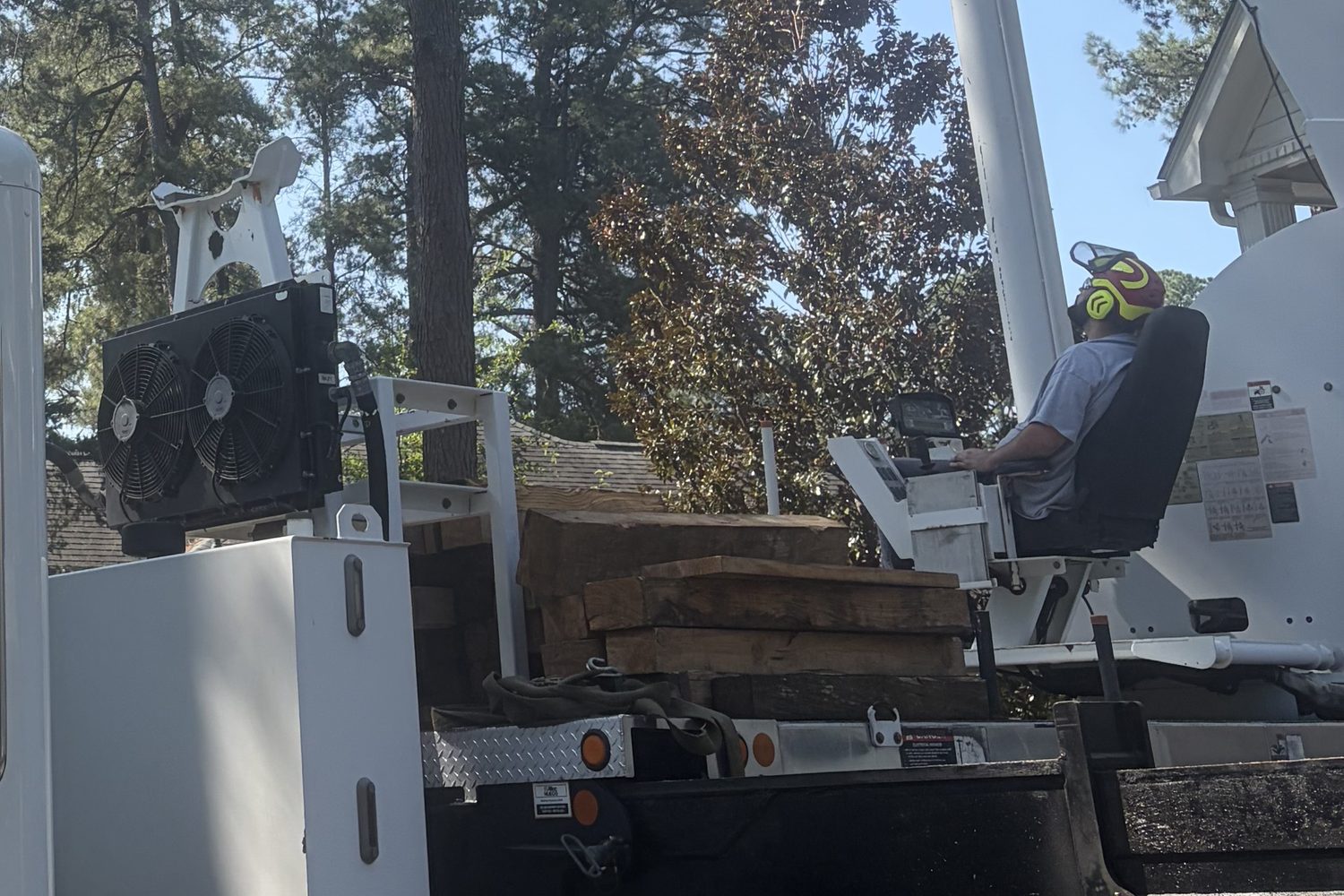
The operator runs the crane; OSHA's general-industry crane rule, 29 CFR 1910.180, the one its tree-care guidance points inspectors to for truck-mounted cranes, says "Only designated personnel shall be permitted to operate a crane covered by this section." The climber works in the tree, rigging each piece and making the cuts. The ground crew works the landing zone. Arbor Aves' own storm advisory puts the two roles side by side: "Our certified crane operator and tree climbers".
The crane is set level and blocked before any load moves
Setup comes before the first pick, and OSHA's general-industry crane rule, 29 CFR 1910.180, states the standard plainly: "The crane is level and where necessary blocked properly." Outriggers, the legs that extend from the truck and carry it while it lifts, go down on ground that can take them, blocked where it needs help. What the crane needs from your lot covers what that ground has to be.
A pick goes sling, tension, cut, lift, set down
 The crew's own photo
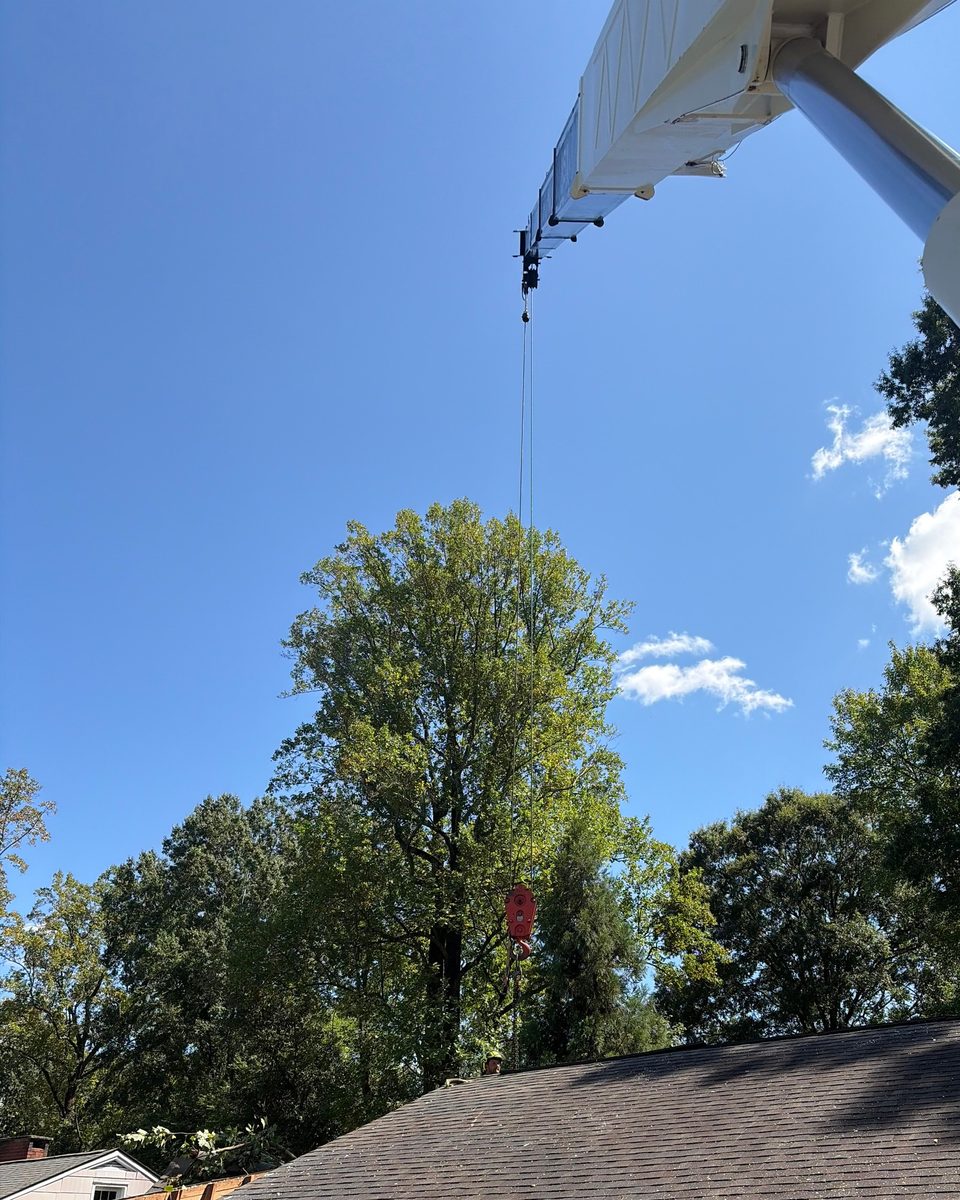
A pick is one piece of the tree, cut free and carried off on the crane's line. A Massachusetts FACE report describes how one crew worked its picks, in four steps: the climber attached the load line and sling near the top of the piece, the operator put tension on the line, the climber made the cut, and the crane lifted the piece away to a spot where it could be cut smaller. Then the next piece, until the tree was down.
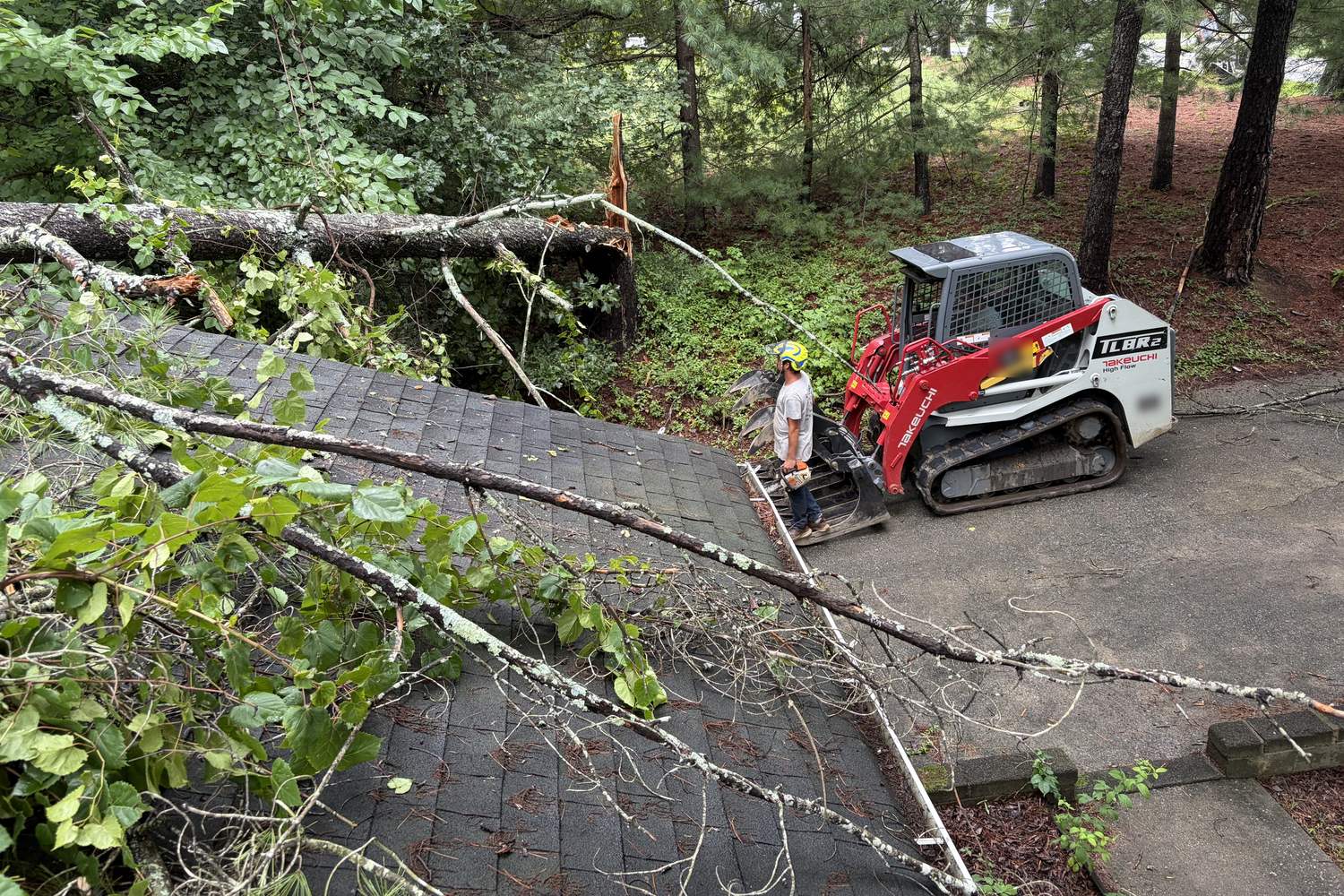
Tension before the cut is the point: with the line already carrying the weight, the piece hangs from the crane when the saw finishes instead of dropping onto the limb below or the roof. That is why the sling point, the cut and the path out are settled before the saw starts. On a tree lying across a roof the same order carries more weight, and a tree on a house, piece by piece explains why.
Weight is judged before anything leaves the tree. OSHA's general-industry crane rule, 29 CFR 1910.180, requires a rating chart in the cab where the seated operator can see it, and says "No crane shall be loaded beyond the rated load"; it does not say how a section of tree is to be weighed. Around the lift, the rule requires the load "well secured and properly balanced in the sling or lifting device before it is lifted more than a few inches", a tag or restraint line "when rotation of the load is hazardous", and no one riding: "No hoisting, lowering, swinging, or traveling shall be done while anyone is on the load or hook."
How the operator and the climber talk is settled before the first pick
Every pick depends on the operator and the climber knowing what the other is about to do, and the operator may not be able to see the cut from the controls. New Jersey's FACE program puts the methods of communication between the tree workers and the ground crew inside the job briefing, so they are agreed before the first piece moves, not worked out with one already hanging. Formal hand signals and a dedicated signal person come from OSHA's construction crane standard, 29 CFR 1926 Subpart CC, which covers cranes used in construction and lists "Tree trimming and tree removal work" among the work it does not cover.
The landing zone stays empty while a piece is in the air
 The crew's own photo
Where the pieces come down is decided in the plan, and that ground stays clear while a pick is moving. New Jersey's FACE program, writing about tree work where pieces drop or are lowered, defines the landing zone as "the area under the tree to which branches and debris will fall", and says that where necessary it should be marked, with cones or other markers. On a crane job the set-down spot can sit away from the trunk, and it is kept clear the same way. OSHA's general-industry crane rule adds that "No person should be permitted to stand or pass under a load on the hook."
If a storm put the tree on your house, the order of things before any crew arrives is on the first hour after a tree hits your house.
Cleanup follows what was settled at the quote
When the last piece is down, the trade's cleanup starts: trunk pieces and brush leave the landing zone, the blocks come up, and the yard is worked back toward how it looked. What happens to the wood and brush is a choice, and each answer is a different amount of work.
That choice is made before the crane arrives. Arbor Aves' own line on its home page: "Tell us how you want the yard left when we quote the job." How that choice moves the number is part of what moves a crane removal quote.
Want this day planned around your tree?
Questions people actually ask.
Does the operator stay at the controls while a piece is in the air?
Yes. OSHA's general-industry crane rule, 29 CFR 1910.180, says the operator shall not be permitted to leave the controls while the load is suspended.
Who decides how big each piece of the tree is?
The crane's rating chart sets the limit: a crane may not be loaded beyond its rated load, and what it can carry changes with how far out the piece hangs. The climber decides where the sling goes and where the cut lands. Neither is a number anyone can give for a tree nobody has seen.
What is a tag line, and why is one used on some pieces?
A tag line is a rope held from the ground on a hanging piece to keep it from spinning. OSHA's general-industry crane rule requires a tag or restraint line when rotation of the load is hazardous.
Is the landing zone the same place the crane sets up?
Not usually. The crane stands where the ground can carry it, and the landing zone is wherever the plan puts the pieces down within the crane's reach. On a tight lot the two can sit close together.