Every tree service we offer.
Arbor Aves Tree & Crane is a trusted tree service company based in Lexington, NC, offering expert tree care to keep the trees on your property healthy, safe, and looking right. Five services, one crew, one number: (336) 963-8330.
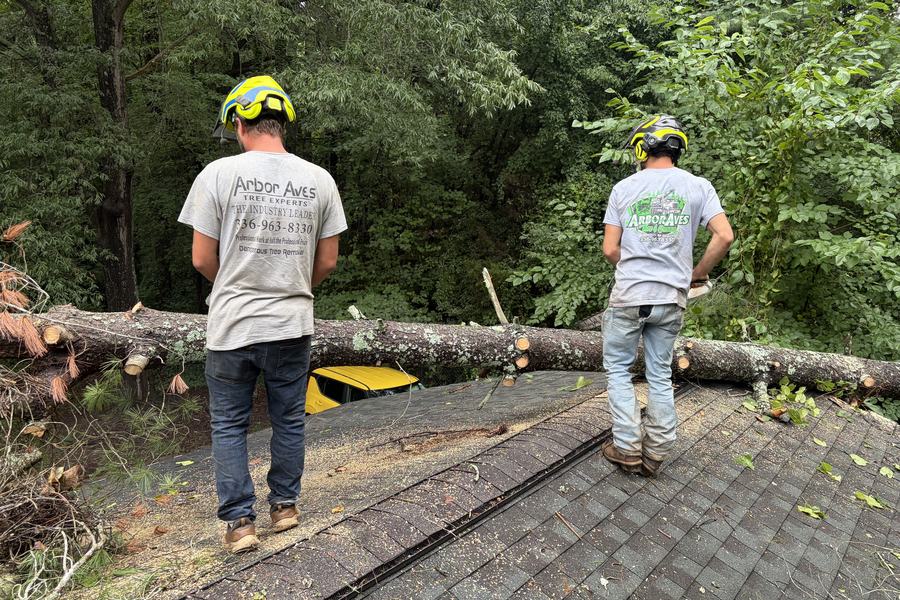
Tree Removal
Dead, dying, leaning, or just in the way. Climbed, roped down in sections, and gone.
- Climbed and taken down in controlled sections
- Rotten and storm-weakened trees handled with extra care
- The yard gets cleaned up before we leave
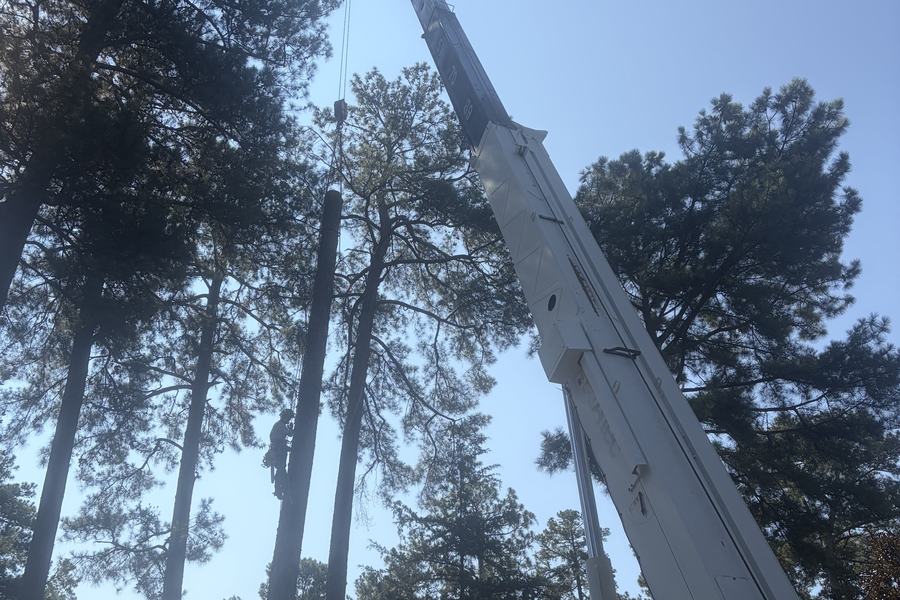
Crane-Assisted Tree Removal
Our certified crane operator lifts the heavy wood up and away, not through your roof.
- Certified crane operator on the controls
- Sections lifted clear of houses, fences, and lines
- The safest way down for big trees in tight spots
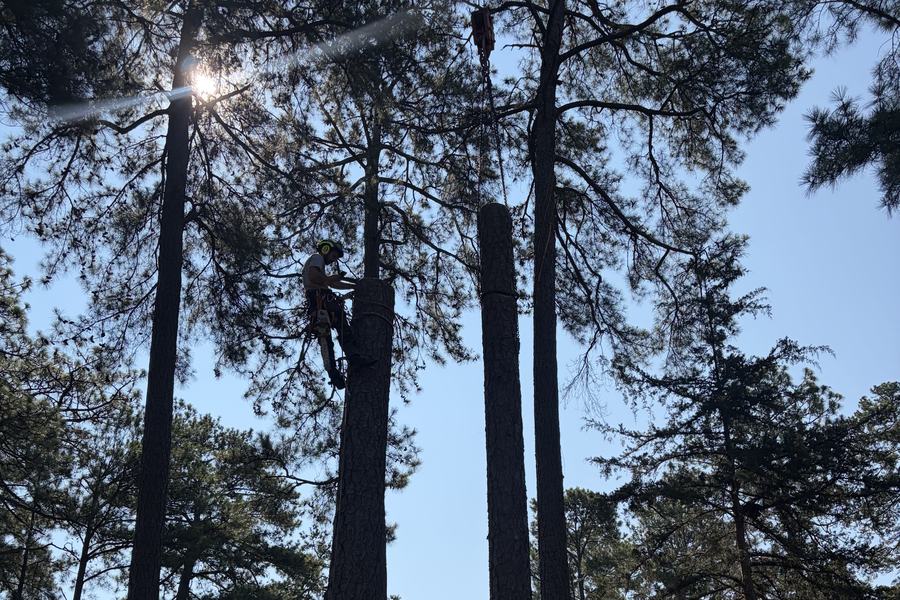
Tree Trimming and Pruning
Clearance cuts and careful pruning that keep good trees healthy and off the house.
- Limbs cleared off roofs, driveways, and walkways
- Deadwood out before it drops on its own
- Clean cuts that help the tree, not hurt it
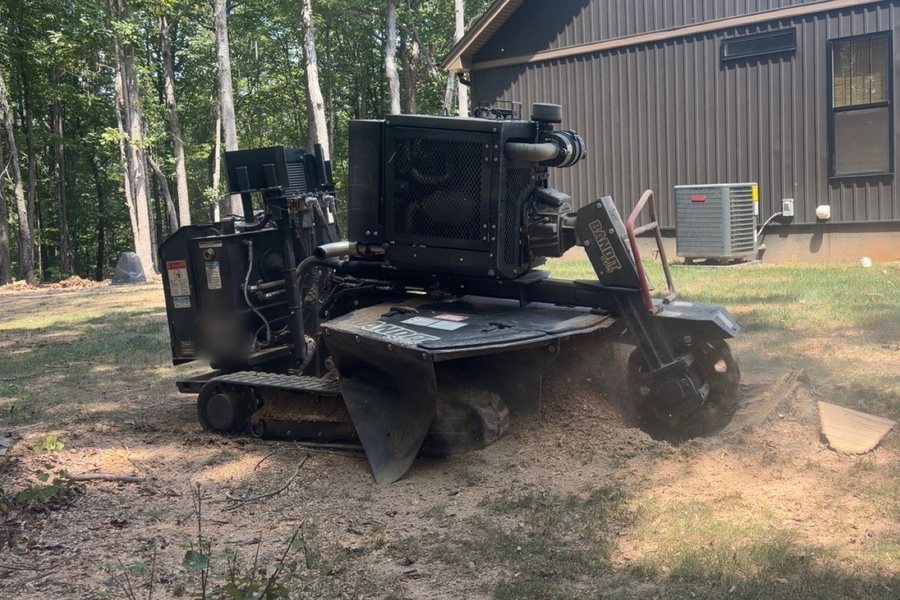
Stump Grinding and Removal
The stump goes below grade, so the lawn closes over like the tree was never there.
- Ground down below the surface
- After our takedowns, or for stumps you inherited
- No more mowing around a dead stump
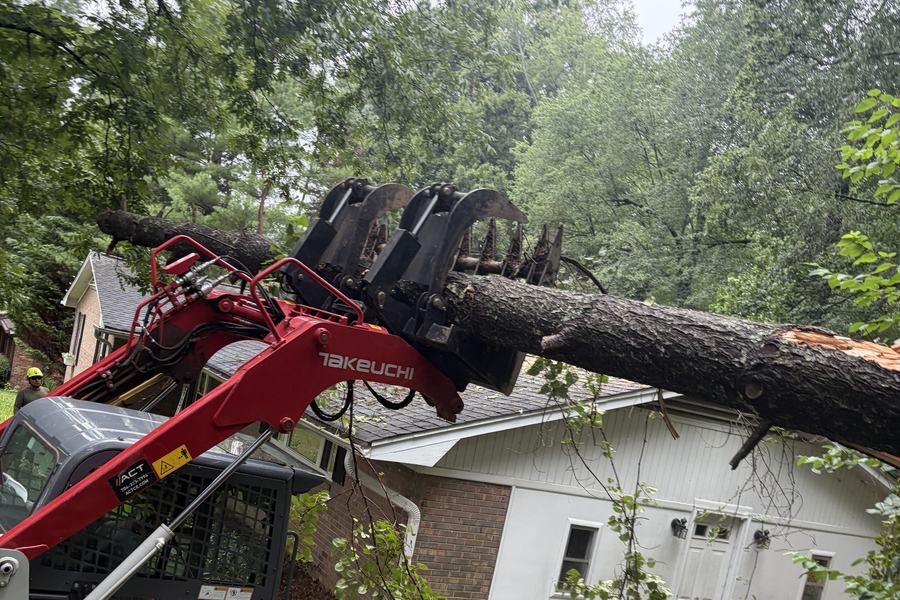
Emergency Tree Services
Tree on the house at 2 AM? The phone is on. We work with your insurance company.
- Open 24 hours a day, every day of the week
- We work with your insurance company on storm claims
- Crane and climbers get weight off structures safely
Not sure which one you need? Describe the tree, we will sort it.
Some questions come before choosing any of the services above, such as whether a pine's browning needles are normal or how far back roof limbs should be cut, and straight answers about tree work addresses them one at a time.
The parts worth reading before you call.
Five services is the short answer to what this crew does. The longer answer is that most of the questions people arrive with are not about which service they need, they are about what a job like theirs actually involves, what moves the number, and what to do in the hour after a tree comes down. Those are written out properly here rather than compressed into a sentence on a service page.
Every guide below is written about the trade, sourced where a fact needs a source, and honest about what this crew does not do. None of it replaces somebody standing in your yard looking at your tree, and none of it is trying to.
Straight Answers. Sourced answers to single tree questions, from browning pine needles to roof limbs, and the guides that already answer the questions not taken up here
Grass Over a Ground Stump. What it takes for a lawn to close over a ground stump: the grindings out, soil mixed in rather than layered, and seed sown in the grass's own season, per NC State Extension
How Tall Is My Tree?. How to estimate a tree's height from the ground with a yardstick and similar triangles, how close the estimate gets, and what the number is for
How to Tell If a Tree Is Dead. The checks a homeowner can make from the ground to tell a dead tree from a dormant or declining one, and where each check can mislead
Pulling Ivy Off a Tree. Why NC State Extension and the NC Forest Service say English ivy should come off a tree, the from-the-ground way to do it, and what the bare trunk shows
How Far Back to Cut Roof Limbs. Why NC sources put at least 6 feet between limbs and a house for squirrels, why a squirrel can still jump farther, and where each cut belongs
Stump Grinding vs Stump Removal. What stump grinding and stump removal mean in North Carolina's public specifications, what each method takes out of the ground, and what each leaves behind
Tree Struck by Lightning. What a lightning strike does to a tree in NC State Extension's words, why its damage can surface late, and why a struck pine is also a beetle question
Pine Dropping Needles. What NC State Extension calls normal fall needle shedding on a pine, the browning patterns that read differently, and who to ask about bark beetles
Old Stumps and Termites. Why an old yard stump feeds termites that already live in the soil, why NC State Extension warns about stumps left under houses, and which signs at the foundation call for a pest management service
What Tree Work Costs. Why no honest crew prints a price, what a straight quote should itemize, and why three quotes for the same tree come back different
Crane Removal Cost. What a crane adds to a tree removal quote: where the crane can stand, how many picks the tree takes, the people on site and any power line nearby
Stump Grinding Cost. What moves a stump grinding quote: the diameter, the number of stumps, grinding depth, access for the grinder, surface roots and what hides in or under the wood
Tree Removal Cost. The nine things a crew is weighing while it walks around your tree, each with a direction, so you can read your own yard before anyone quotes it
Tree Trimming Cost. What moves a tree trimming quote: how high the cuts go, how much of the crown comes out, what the limbs hang over, dead wood, the service line and the brush
A Crane Day, in Order. The order of a crane tree removal day, from the look at the tree and the briefing through each pick and the landing zone to the yard coming back
Crane or Climber?. How a tree crew chooses between a crane and a climber with ropes, from what sits beneath the tree to the wood, the weight, the wires and the lot
Dead and Rotten Trunks. Why a crane holds each piece of a dead or rotten trunk before the cut, where decay hides, and what the crane still cannot fix
Tree on a House. How a crane and climbers take a fallen tree's weight off a house, why the order of cuts matters on a roof, and who stays where during the lifts
What a Tree Crane Needs. What a crane needs from a lot before a tree comes down: outriggers on pads, firm ground away from the septic field, the street question and the wires overhead
After the Storm. What to look at in the days after a storm, from the trees still standing and storm-damaged pines to where the wood can go and the county's alert sign-up
Emergency or Monday Job?. Three tiers for a storm-damaged tree, plus the published NC State criteria for whether a damaged tree is worth keeping
The First Hour. The order to work in after a tree comes down: people, wires, photographs, access, then the call, with the Davidson County utility numbers
Insurance Claims. How a tree damage claim moves in North Carolina, in the Department of Insurance's own order, from the first call to a disputed settlement, and who decides each step along the way
Tree on a Power Line. Who to call when a tree is on a power line in Davidson County, whose wire is whose from the pole to the meter, and what North Carolina law says about working near the line
Storm Log. A dated record of storms that reached Davidson County, with NWS watch and warning terms, the county's electric providers and what Lexington and Thomasville take at the curb
What Not to Touch. What to leave alone after a storm, from a downed line and anything touching it to bent limbs, hung branches, ladders and chain saws, in the agencies' own words
What to Photograph. What to capture before the saw starts, from the state regulator's own instruction to photograph the damage before any temporary repairs
Tree Work Glossary. Plain meanings for the tree parts, pruning methods, rigging terms, stump material and measurements that should be clear when a homeowner and crew discuss the scope of work, and where the guides define more
Below Grade. The reference level in a stump grinding description, and the depth, area and later-use questions that the phrase itself leaves open
Branch Collar. The branch attachment named in pruning descriptions, and the difference between locating an attachment and deciding which limb needs work
Crown Raising. What crown raising is, why a quote for it needs a height and the thing that height clears, and the heights one NC Forest Service example specification pairs with named surfaces
Crown Reduction. What crown reduction is, how it differs from topping, and why the USDA Forest Service, NC State and the NC Forest Service all treat it with caution
Crown Thinning. What crown thinning is, what lion's tails are, and how a quote can say how much comes out and from where without a number the sources do not give
Crown. What crown means in a tree conversation, why the location matters, and what a pruning description should specify beyond the word
Drop Zone. What a drop zone is, how OSHA, California and New Jersey name and define the ground where cut pieces come down, and why this entry gives no size
Grapple. What a grapple is, how hinged jaws that grip differ from a sling that connects a load to equipment, and what the word on a quote does not say
Rigging. The rope, block and rigging-point gear that lowers a cut piece of a tree, and the two different tests the NC Forest Service and California use for lowering a piece instead of dropping it
Sectional Takedown. What sectional takedown means, how OSHA and the UK Health and Safety Executive word the same work, and why what stands around the tree matters to the method
Stump Grindings. The woody material left by grinding, separated from the cleanup, hauling and soil decisions that should be stated in the job quote
Hazard Trees. What makes a tree a hazard in the USDA Forest Service's terms, the eight signs on the fence-line check by tier, how to look from the ground, and what moving the target does
A Tree Starting to Lean. How to tell a lean a tree grew into from a lean it never had, using the trunk, the crown and old photographs, and why a new lean is a Call now sign
Big Dead Limbs. Why a big dead limb can come down without a storm, how to pick one out from the ground, and why what sits under it decides how much it matters
A Crack at the Fork. What makes a fork of two equal stems weak, how a seam of included bark differs from a crack, and what the trade does about a weak fork
Lifted or Cracked Soil. Why ground that lifts, cracks or mounds beside a trunk is read as a root sign, what damages roots before the ground moves, and why the check calls it Call now
Limbs on the Roof or Lines. What a limb resting on the roof does, how limbs and wires give squirrels and carpenter ants a way in, and why a limb on the line to the house goes to the utility first
Mushrooms at the Base of a Tree. What a mushroom or conk at the base of a tree is, why where it grows changes what it points to, and which root rots NC State Extension names
Bark Peeling Off a Tree. Which yard trees shed bark as they grow, what a canker is when bark leaves a trunk that held it, and why the size and height of a bare patch matter
Sawdust at the Base of a Tree. Why sawdust collects below a tree, what carpenter ants and ambrosia beetles push out of the wood, and why the hollow behind the pile matters more than the insect
Forsyth County. Why a tight lot in an older neighborhood changes a removal, what the city will not collect from a contractor's pile, and which ordinance exemptions the joint code actually names
Guilford County. The county holds two cities that publish different answers on tree permits, curbside limits and who owns the wire, and which set covers you depends on the city line
How Far We Travel. Davidson County is everyday work and bigger jobs travel further, with the actual evidence for where the crew has been instead of a map
Mecklenburg County. Charlotte protects native trees of 30 inches and up inside the city limits, which changes what a removal there involves, and the far end of the map earns the bigger jobs
Randolph County. Why ordinary tree work in Randolph County is not a trip, what the Extension count says about its timberland, and which outage numbers the county has
Rowan County. The four outage numbers Rowan County publishes, where a city's responsibility for the wood stops, and the permit chapter that does not reach a house lot
Tree Care Calendar. What the weather and the trees do in Davidson County each month of the year, from freeze dates to storm seasons, pests and pruning windows
Hurricane Season. Why a storm that makes landfall on the coast can still topple trees in the Piedmont, what five named storms did, and what agencies say to do before the season
Ice Storms. Why the Piedmont gets freezing rain, which trees are more likely to break under ice, and what the NC Forest Service, NC State Extension and the Weather Service say to do before, during and after
Spotted Lanternfly. What the 2026 confirmation of spotted lanternfly in Davidson County means for a yard, from egg-mass season and host trees to why a cut tree-of-heaven resprouts
Trees of the Piedmont Yard. How NC State describes trees of the Piedmont yard in storms, organized by NC State Extension's weak-wooded list, with a page for each tree and routes to the ice, warning-sign and Moore County pine pages
Bradford Pear. Why a Bradford pear splits at its forks, how its cross-pollinated offspring spread, what the NC Bradford Pear Bounty asks of an owner, and why a cut stump can resprout
Loblolly Pine. How loblolly pine grows in the Piedmont, what NC State and the NC Forest Service say about wind, rust and bark beetles, and which pages cover taking a tall one down near a house
Water Oak. How water oak grows, why NC State lists it as weak wooded and shorter lived than most oaks, how decay shows in general signs, and where removal of a big one over a house or drive is covered